
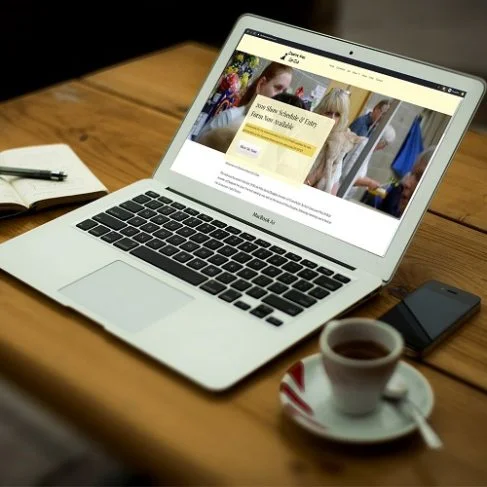
Before a kitten buyer picks up the phone, they look you up online.
That is not a guess. It is what buyers tell me when I talk to them at shows, in cat fancy Facebook groups, and through the enquiries that come into my own cattery. They Google your prefix. They search your cattery name. They look for a website. And what they find — or fail to find — determines whether they ever make contact at all.
If you have been wondering why your phone is quieter than it used to be, or why you are getting fewer serious enquiries despite having kittens available, this is the conversation worth having.
My own experience as a breeder
I want to start with something that I think speaks louder than anything else I could say in this article.
I have bred Siamese and Oriental cats since 2004. In all that time, I have never once needed to advertise a kitten. I have never used Facebook to find homes for a litter. Every single enquiry I receive comes through my cattery website — people who have found me through Google, done their research, liked what they found, and made contact.
I am not telling you this to boast. I am telling you because it demonstrates something important: a well-built, properly maintained cattery website does not just help you find homes for kittens. Done right, it means you never have to look for buyers at all. They find you.
That is what is possible. And it starts with understanding what buyers are actually doing when they look for a kitten.
How kitten buyers actually behave
Ten or fifteen years ago, word of mouth and the breed club kitten list were enough for most breeders. A recommendation from a friend, a name passed on at a show, a listing in the club newsletter — that was the pipeline.
It still matters. But it is no longer the whole picture.
Today’s kitten buyer starts online. They search Google. They scroll through Pets4Homes. They ask in Facebook groups. And at almost every point in that process, if they hear your name or come across your prefix, the next thing they do is search for your website.
I have been building websites for cat breeders since 2004 and I have watched buyer behaviour shift considerably. The buyers I speak to now — often spending well over £1,000 on a pedigree Siamese, Oriental, British Shorthair, or any other registered breed — treat the website check as a basic due diligence step. Not because they are suspicious. Because they are sensible.
They are making a significant financial and emotional commitment to an animal they may not be able to bring home for another eight or ten weeks. Of course they want to see evidence that the breeder is serious, organised, and genuinely invested in their cats before they make contact.
Your website is where that evidence lives.
What buyers are looking for when they find you
When a buyer lands on a cattery website, they are not reading every word. They are scanning for specific signals that tell them whether you are worth contacting.
They want to see photographs — of your cats, your kittens, your home environment. Not professional studio shots. Real images that show well-socialised, well-cared-for animals living as part of a family. A Siamese buyer wants to see cats on the sofa, kittens mid-play, a queen with her litter. A British Shorthair buyer wants to see that round-faced charm coming through in your photos. Generic or outdated images undermine confidence before a word has been read.
They want to see your credentials. Your GCCF prefix. Your breed club memberships. Your show results. A buyer who finds a page listing championship titles, best in show wins, and GCCF affiliation feels considerably more confident than one who finds nothing but a mobile number.
They want to see your health testing. For British Shorthairs, that means HCM screening. For Siamese and Orientals, progressive retinal atrophy testing is increasingly expected. Buyers researching pedigree cats are more informed than ever — many know exactly what tests they should be looking for. A breeder whose website makes health testing visible is a breeder who looks like they take it seriously.
They want to understand your process. How do they reserve a kitten? What deposit do you take? At what age do kittens leave? What paperwork comes with them? If none of this is clear, buyers have to make contact just to get basic information — and many will not bother.
And they want to see that the site is current. An active breeder with kittens expected, recent show results, and up-to-date photos looks like someone worth waiting for. A site that has not been touched in three years raises questions that have nothing to do with the quality of your cats.
The truth about selling kittens on Facebook
Many breeders use Facebook as their main — sometimes only — online presence for finding kitten buyers. I understand why. It is familiar, free, and reaches people in your network quickly.
But there is something most breeders either do not know or prefer not to think about: selling animals on Facebook is against their terms of service. Facebook’s commerce policies explicitly prohibit the sale of animals on the platform, including in groups and on pages. Accounts and pages are shut down for it — often without warning and often without any straightforward route to appeal or reinstatement.
Every litter announcement you post with a price attached is a violation of those terms. The fact that it has not been enforced against you yet does not mean it will not be. Breeders who have had their pages removed know how damaging it is — years of followers, photos, testimonials, and enquiries, gone overnight.
Beyond the terms of service, Facebook has real practical limitations even for breeders who stay within the rules. Algorithm changes reduce the organic reach of posts without you realising it. A Facebook page does not appear reliably when someone searches Google for “British Shorthair kittens Hampshire” or “registered Siamese breeder UK.” That search traffic — buyers who are actively looking, right now — goes to whoever has a properly built website.
And there is a significant portion of kitten buyers — particularly older buyers and those who are not active on social media — who will not message a stranger on Facebook before doing some independent research. If your only presence is a Facebook page, you are invisible to that group entirely.
A website gives you something Facebook cannot: an asset you own, that cannot be taken away, that appears in Google search results, and that works for you regardless of what any platform decides to do with its policies next month.
What an out-of-date website is actually telling buyers
This is the part worth being honest about, because I see it often among breeders who do have a website but have not been able to keep it current.
An out-of-date site sends a message to buyers, even if that is not your intention. Kittens listed as available that clearly went months ago. Show wins from several years back as the most recent entry. Photos of Siamese or British Shorthair cats who may no longer be part of your programme. Contact details that turn out to be wrong.
Buyers notice all of this. Most will not reach out to ask — they will simply move on to the next breeder on their list.
I have spoken to buyers who passed on a breeder they were genuinely interested in because the website looked abandoned. The cats were fine. The breeder was serious and experienced. But the online presence gave entirely the wrong impression, and the buyer had no way of knowing that.
It is not fair. But it is real.
The reason most breeders do not keep their site current is not because they do not care — it is because updating it is too complicated, too time-consuming, or dependent on someone else doing it for them. That is a problem with how the website was set up, not with the breeder.
What a well-maintained website actually does for your cattery
A cattery website that is kept up to date works for you around the clock, without you having to do anything active to make it happen.
It answers the questions buyers have before they contact you, which means that when they do call or message, they are already warm. They have seen your cats. They know your prefix and your credentials. They understand your process. They have looked at your show wins. The conversation starts from a much better place than a cold enquiry from someone who found your number on Pets4Homes.
It means Google can find you. When someone searches for your breed in your area, a properly built and maintained website gives you a real chance of appearing in the results.
It gives you a professional email address — @yourcatteryname.co.uk — rather than a personal webmail account. A small thing, but it changes how buyers perceive you before the first reply is even sent.
And it means that your show wins, health tests, and breeding credentials are visible to every buyer who looks you up — not just the ones who happen to follow your Facebook page on the day you post.
Why the standard web design market does not work for cat breeders
I built Cats Whiskers Web Designs because I am a cat breeder and a Full GCCF Judge, and I know from direct experience that general web designers do not understand what a cattery website needs to do.
They do not know what a prefix is. They do not understand why a health testing page matters or how to present GCCF registration in a way that means something to a buyer. They do not know the difference between what a Siamese buyer and a British Shorthair buyer expect to find. And they charge prices that bear no relationship to breeding budgets — because they are used to working with commercial clients, not hobby breeders for whom this is a passion, not a business.
The result is usually a generic site that looks passable but does not do the specific job a cattery website needs to do. Or a quote so far beyond what a breeder can justify that the whole project gets shelved indefinitely.
I have been building websites for Siamese, Oriental, British Shorthair, and all-breed catteries since 2004. I breed and show cats myself. I sit on club committees. I judge at GCCF shows. I do not need the cat fancy explained to me, and I build cattery websites that reflect how it actually works.
The annual fee is £295, all in. No setup fee. No hourly charge for updates. No support ticket system. You send me a message when you need your kittens updated, your show results added, or your stud page refreshed — and it is done, typically within 48 hours.
Is it time to sort your website?
I have not advertised a kitten in over twenty years of breeding. My website does that work for me, and it can do the same for you.
If you have been putting it off, or if your current site has been sitting untouched for longer than you would like to admit, it is worth thinking about what that is costing you in enquiries you are simply not receiving.
Get in touch and we can have a straightforward conversation about what your cattery website should look like and what it would take to get it sorted.